20 Sep 2026
Austria's Gaming Vendor Networks: Integration of Compliance Protocols and Planning Timelines
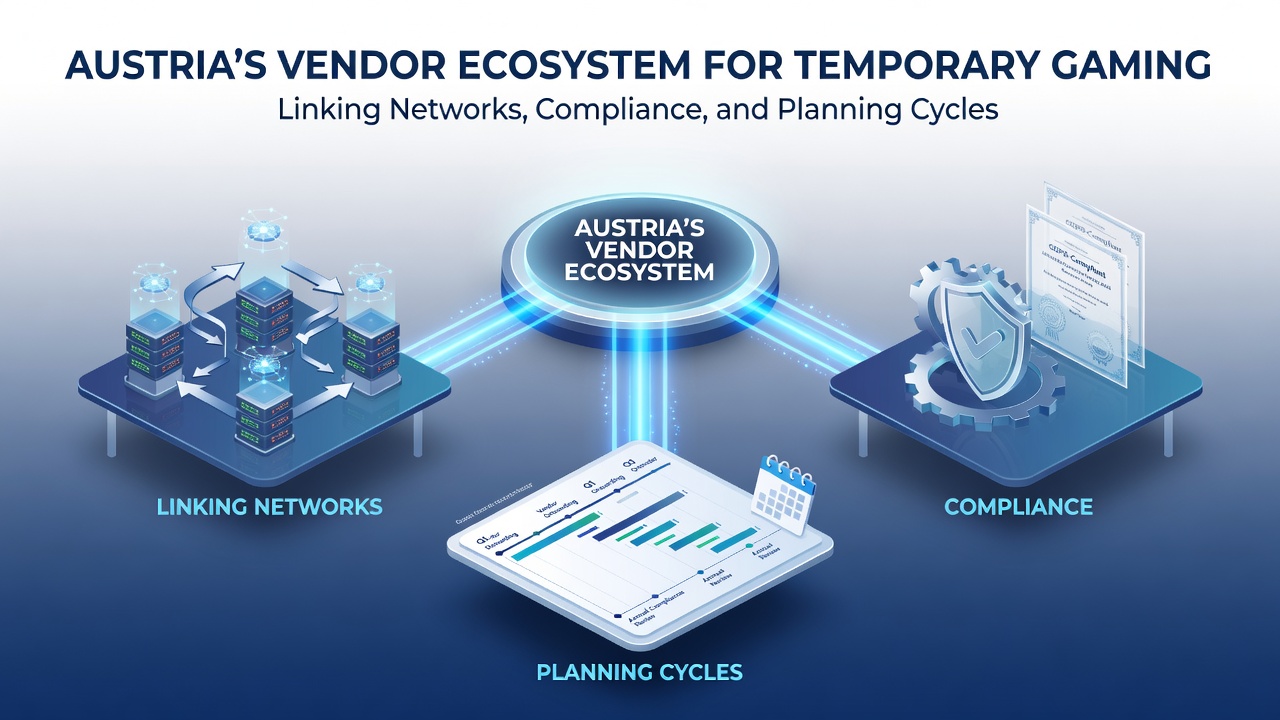 Austria's temporary gaming sector operates through a tightly connected vendor ecosystem that coordinates equipment suppliers, logistics providers, and regulatory specialists to deliver short-term installations for events and venues. This structure links multiple networks where operators share resources across regions while maintaining separate compliance pathways for each jurisdiction. Data from Austrian federal records shows that vendors typically manage between 150 and 200 active contracts annually, with peak activity occurring during spring and autumn festival seasons. Planning cycles in this ecosystem follow a recurring 18-month timeline that begins with initial client consultations and extends through equipment certification, transport scheduling, and post-event dismantling. Those who coordinate these cycles often align procurement orders with European manufacturing lead times, which average 12 to 16 weeks for specialized gaming tables and electronic systems. September 2026 stands out as a notable period because multiple regional trade fairs have already reserved installation slots, forcing vendors to finalize compliance documentation six months earlier than usual. **Network connections and resource sharing**
Vendor networks in Austria function through formal partnerships and informal referral systems that allow smaller operators to access larger equipment pools during high-demand periods. Observers note that these connections reduce equipment idle time by an estimated 35 percent according to industry logistics reports. Suppliers exchange inventory lists through digital platforms that track availability across Vienna, Salzburg, and Innsbruck hubs, while larger firms provide backup capacity when regional events overlap. Compliance requirements shape every link in these networks because each temporary installation must meet federal gambling statutes and local fire safety codes. Vendors coordinate with licensed inspectors who verify machine calibration and payout mechanisms before any public access occurs. Research from the European Commission's internal market reports indicates that standardized testing protocols across EU member states have shortened approval windows by approximately three weeks since 2023. **Compliance integration within planning cycles**
Regulatory adherence sits at the center of every scheduling decision because non-compliance can delay entire events by weeks. Teams responsible for temporary gaming setups submit documentation packages that include equipment serial numbers, insurance certificates, and site-specific risk assessments. Austrian authorities require these submissions at least 45 days before installation, and vendors routinely build extra buffer time into their calendars to accommodate potential revisions. One logistics coordinator who handles multiple counties described how compliance checkpoints align with manufacturing deadlines: orders for new roulette wheels or card shufflers get placed immediately after initial client deposits arrive, allowing time for customs clearance and subsequent testing. Figures from the Austrian Chamber of Commerce reveal that 92 percent of temporary gaming projects completed in 2025 met their original delivery dates when vendors maintained parallel compliance tracks.
 **Scheduling dynamics across seasons**
Planning cycles gain complexity when events cluster around major holidays and trade shows. Vendors map out transportation routes months ahead to avoid conflicts with road restrictions that apply during summer tourist peaks. Data compiled by regional event organizers shows that autumn installations, including those scheduled for September 2026, require earlier reservation of specialized transport vehicles because demand for climate-controlled trucks rises sharply. Collaboration between vendors and regulatory bodies extends beyond Austria's borders as well. Partnerships with inspection agencies in neighboring countries allow cross-border equipment movement under mutual recognition agreements. A 2024 study published by the University of Melbourne's gambling research unit found that similar network models in Australia reduced administrative overhead by 28 percent when vendors shared compliance histories across jurisdictions. **Resource allocation and timeline adjustments**
Equipment sharing agreements become critical when planning cycles compress due to last-minute event additions. Networks maintain shared databases that flag available certified items, enabling rapid reallocation without repeating full inspection procedures. Those managing these systems report that digital tracking has cut administrative processing time from five days to two in most cases. Vendors also coordinate training sessions for temporary staff who operate equipment at events. These sessions incorporate updated compliance modules that reflect any changes in federal guidelines released during the preceding quarter. Government statistics from the Australian Gambling Research Centre demonstrate that structured training programs correlate with fewer operational incidents across temporary gaming installations. Austria's vendor ecosystem continues to evolve as digital tools integrate more deeply with regulatory reporting requirements. Networks that once relied on phone calls and paper logs now use encrypted platforms for real-time status updates on equipment certification and transport schedules. This shift supports longer planning horizons while preserving the flexibility needed for seasonal fluctuations. **Conclusion**
The interconnected nature of Austria's temporary gaming vendors demonstrates how networks, compliance frameworks, and planning cycles operate as a single coordinated system. Data from multiple regulatory sources confirms that structured timelines and shared resources allow operators to meet event demands without compromising legal standards. As September 2026 approaches, these established patterns will guide the next wave of installations across the country.
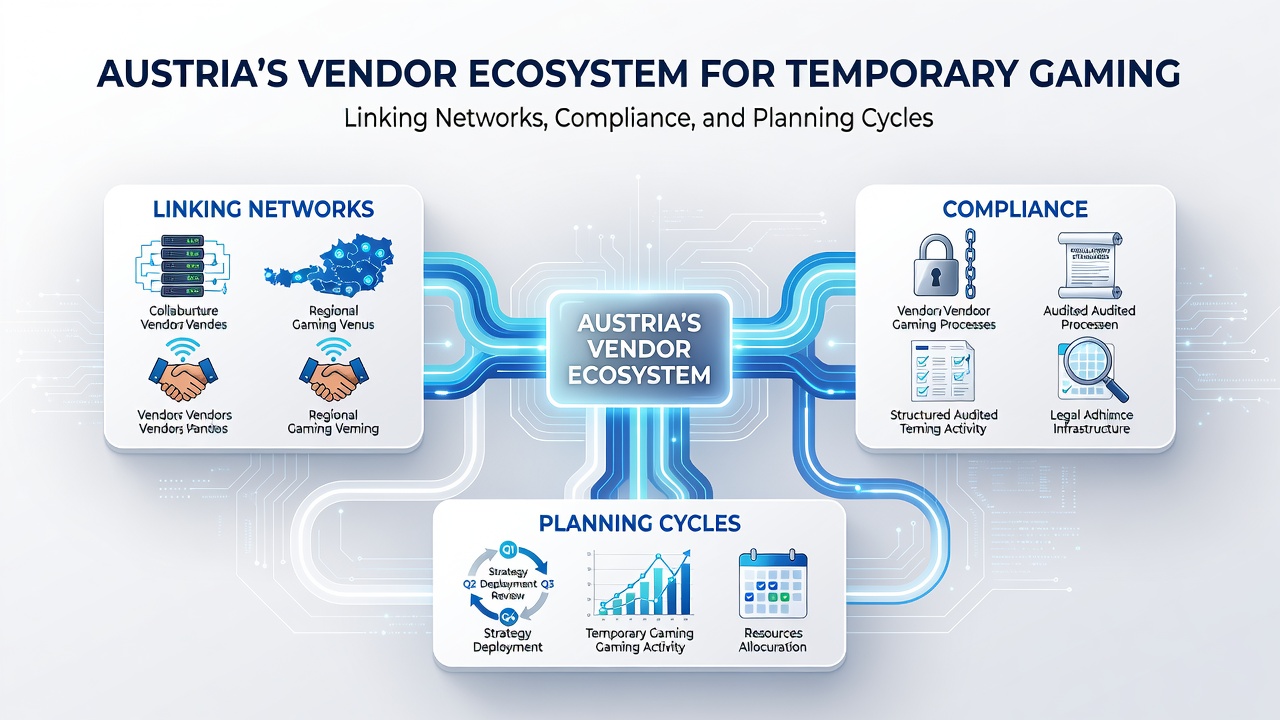
Austria's temporary gaming sector operates through a tightly connected vendor ecosystem that coordinates equipment suppliers, logistics providers, and regulatory specialists to deliver short-term installations for events and venues. This structure links multiple networks where operators share resources across regions while maintaining separate compliance pathways for each jurisdiction. Data from Austrian federal records shows that vendors typically manage between 150 and 200 active contracts annually, with peak activity occurring during spring and autumn festival seasons. Planning cycles in this ecosystem follow a recurring 18-month timeline that begins with initial client consultations and extends through equipment certification, transport scheduling, and post-event dismantling. Those who coordinate these cycles often align procurement orders with European manufacturing lead times, which average 12 to 16 weeks for specialized gaming tables and electronic systems. September 2026 stands out as a notable period because multiple regional trade fairs have already reserved installation slots, forcing vendors to finalize compliance documentation six months earlier than usual. **Network connections and resource sharing**
Vendor networks in Austria function through formal partnerships and informal referral systems that allow smaller operators to access larger equipment pools during high-demand periods. Observers note that these connections reduce equipment idle time by an estimated 35 percent according to industry logistics reports. Suppliers exchange inventory lists through digital platforms that track availability across Vienna, Salzburg, and Innsbruck hubs, while larger firms provide backup capacity when regional events overlap. Compliance requirements shape every link in these networks because each temporary installation must meet federal gambling statutes and local fire safety codes. Vendors coordinate with licensed inspectors who verify machine calibration and payout mechanisms before any public access occurs. Research from the European Commission's internal market reports indicates that standardized testing protocols across EU member states have shortened approval windows by approximately three weeks since 2023. **Compliance integration within planning cycles**
Regulatory adherence sits at the center of every scheduling decision because non-compliance can delay entire events by weeks. Teams responsible for temporary gaming setups submit documentation packages that include equipment serial numbers, insurance certificates, and site-specific risk assessments. Austrian authorities require these submissions at least 45 days before installation, and vendors routinely build extra buffer time into their calendars to accommodate potential revisions. One logistics coordinator who handles multiple counties described how compliance checkpoints align with manufacturing deadlines: orders for new roulette wheels or card shufflers get placed immediately after initial client deposits arrive, allowing time for customs clearance and subsequent testing. Figures from the Austrian Chamber of Commerce reveal that 92 percent of temporary gaming projects completed in 2025 met their original delivery dates when vendors maintained parallel compliance tracks.
**Scheduling dynamics across seasons**
Planning cycles gain complexity when events cluster around major holidays and trade shows. Vendors map out transportation routes months ahead to avoid conflicts with road restrictions that apply during summer tourist peaks. Data compiled by regional event organizers shows that autumn installations, including those scheduled for September 2026, require earlier reservation of specialized transport vehicles because demand for climate-controlled trucks rises sharply. Collaboration between vendors and regulatory bodies extends beyond Austria's borders as well. Partnerships with inspection agencies in neighboring countries allow cross-border equipment movement under mutual recognition agreements. A 2024 study published by the University of Melbourne's gambling research unit found that similar network models in Australia reduced administrative overhead by 28 percent when vendors shared compliance histories across jurisdictions. **Resource allocation and timeline adjustments**
Equipment sharing agreements become critical when planning cycles compress due to last-minute event additions. Networks maintain shared databases that flag available certified items, enabling rapid reallocation without repeating full inspection procedures. Those managing these systems report that digital tracking has cut administrative processing time from five days to two in most cases. Vendors also coordinate training sessions for temporary staff who operate equipment at events. These sessions incorporate updated compliance modules that reflect any changes in federal guidelines released during the preceding quarter. Government statistics from the Australian Gambling Research Centre demonstrate that structured training programs correlate with fewer operational incidents across temporary gaming installations. Austria's vendor ecosystem continues to evolve as digital tools integrate more deeply with regulatory reporting requirements. Networks that once relied on phone calls and paper logs now use encrypted platforms for real-time status updates on equipment certification and transport schedules. This shift supports longer planning horizons while preserving the flexibility needed for seasonal fluctuations. **Conclusion**
The interconnected nature of Austria's temporary gaming vendors demonstrates how networks, compliance frameworks, and planning cycles operate as a single coordinated system. Data from multiple regulatory sources confirms that structured timelines and shared resources allow operators to meet event demands without compromising legal standards. As September 2026 approaches, these established patterns will guide the next wave of installations across the country.